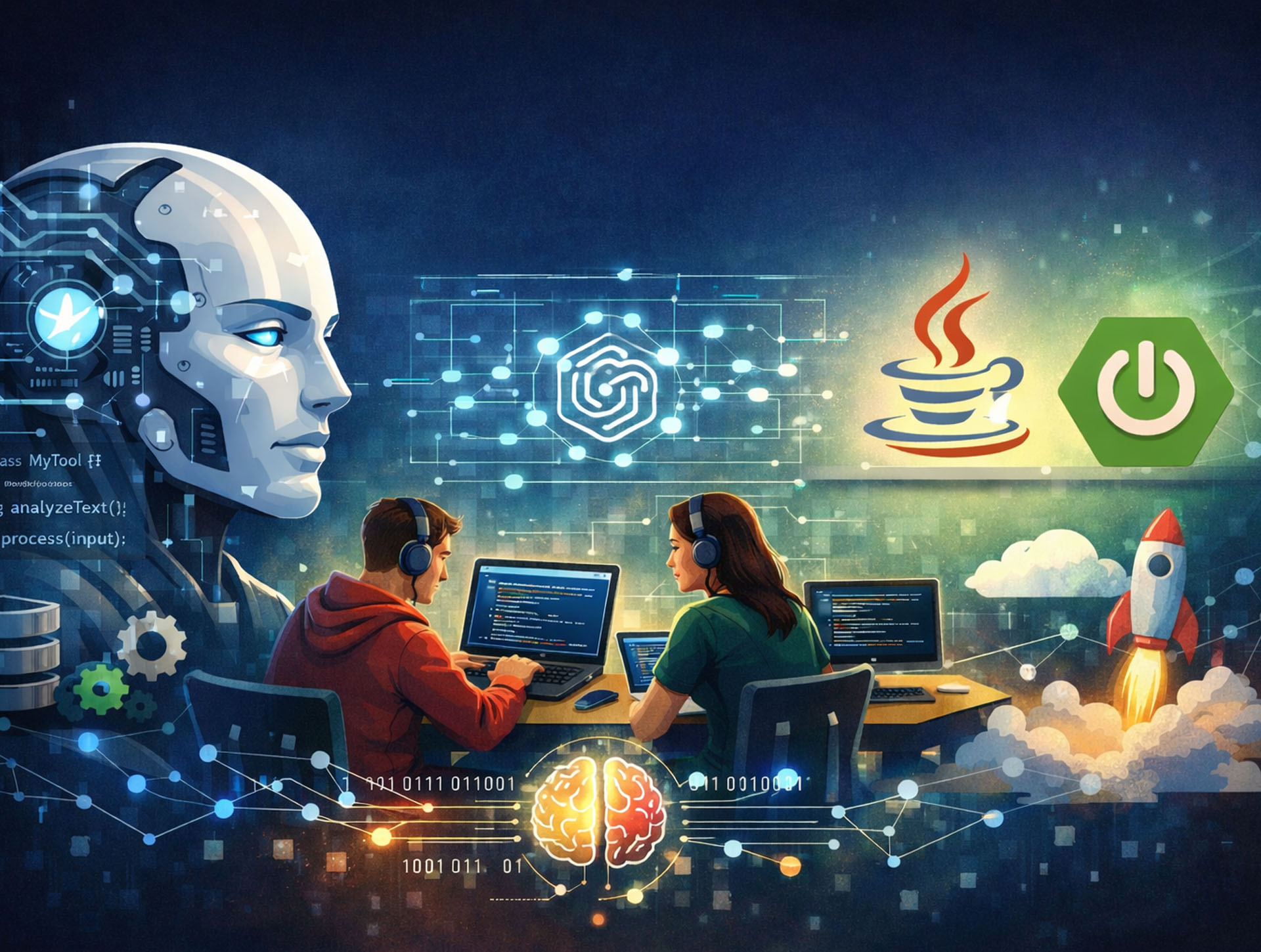
Unlocking Developer Potential with LLM-Powered Tools in Java and Spring Boot
The landscape of software development is in constant flux, and the advent of Large Language Models (LLMs) represents one of the most significant shifts in recent memory. While much attention focuses on user-facing applications, the real power of LLMs is beginning to transform how developers themselves work. Imagine a world where your tools do more than just automate repetitive tasks; they actively assist, suggest, and even generate code based on natural language prompts. This isn’t science fiction anymore. We’re actively seeing the rise of intelligent developer assistants, and for many enterprises, Building LLM-Powered Developer Tools with Java and Spring Boot offers a robust and familiar path forward.
For Java developers, accustomed to the stability, scalability, and vast ecosystem of the JVM, integrating cutting-edge AI might seem daunting. However, thanks to the continuous innovation within the Spring ecosystem, particularly with the introduction of the Spring AI framework, this integration is becoming remarkably straightforward. We’re no longer talking about complex, low-level machine learning libraries, but rather high-level abstractions that make LLM integration in Java as familiar as building any other REST service.
Why Java and Spring Boot for AI-Driven Development Tools?
Choosing Java and Spring Boot for these intelligent tools isn’t just about familiarity; it’s a strategic decision. Spring Boot’s opinionated approach simplifies project setup and configuration, allowing developers to focus on core functionality rather than boilerplate. When paired with Spring AI, connecting to various LLM providers (like OpenAI, Google Gemini, or local models) becomes a matter of configuration and a few lines of code. This robust foundation is ideal for building
Practical Applications: Enhancing Developer Productivity
The potential applications for LLM-powered developer tools are vast and exciting. Think beyond basic code completion:
-
Smart Code Generation and Refactoring Suggestions
Imagine a tool that, based on a method signature and a natural language description, can generate boiler-plate code, suggest optimal refactorings, or even identify potential performance bottlenecks. LLMs excel at understanding context and generating coherent code snippets.
-
Automated Documentation and Commenting
One of the most tedious tasks is keeping documentation up-to-date. An LLM-powered tool could analyze your code and generate initial drafts for Javadoc comments, API documentation, or even README files, significantly improving developer productivity tools.
-
Natural Language Interface for Complex APIs or Build Systems
Instead of memorizing intricate command-line parameters or API calls, developers could simply ask their tool in plain English, “How do I deploy this service to production on staging?” or “Show me all users with pending tasks.”
-
Intelligent Test Case Generation
Writing comprehensive unit and integration tests is crucial but time-consuming. LLMs can analyze your code and suggest relevant test cases, edge cases, and even generate test method stubs, offering powerful AI-driven coding assistance.
Getting Started: Integrating LLMs with Spring AI
The practical path typically involves leveraging Spring AI starters. For example, to integrate with OpenAI, you’d include dependencies like spring-ai-openai-spring-boot-starter. You then configure your API keys and potentially the model name in application.properties. The core interaction often revolves around the ChatClient interface:
@Service
public class CodeAssistantService {
    private final ChatClient chatClient;

    public CodeAssistantService(ChatClient chatClient) {
        this.chatClient = chatClient;
    }

    public String generateCodeSuggestion(String prompt) {
        return chatClient.call(prompt);
    }
}
While this snippet is simplified, it demonstrates the approachable nature. The real work then shifts to crafting effective prompts (prompt engineering), handling streaming responses, and integrating the LLM’s output gracefully into your developer tool’s workflow. This often involves parsing JSON or structured text, validating the output, and iteratively refining your prompts to achieve the desired results.
Navigating the Road Ahead
While the prospects are exciting, building with LLMs isn’t without its considerations. “Hallucinations” – where LLMs confidently generate incorrect information – require careful mitigation strategies, often involving human oversight or verification. Managing API costs, optimizing for latency, and ensuring data privacy are also critical factors, especially in an enterprise setting. However, the benefits in terms of increased efficiency and innovation far outweigh these challenges, provided they are addressed proactively.
The journey of building intelligent developer tools using LLMs is just beginning. With Java and Spring Boot providing a stable, scalable, and increasingly integrated platform, developers are exceptionally well-positioned to lead this charge. By embracing these new capabilities, we can move towards a future where our tools are not just extensions of our hands, but powerful augmentations to our minds, making development smarter, faster, and more enjoyable.